

Need a flare gun for your boat? This guide covers USCG approved 37mm boat flare launchers, marine flare kits, Coast Guard rules and flare safety.
Flare Gun for Boats: USCG Approved 37mm Boat Flare Launchers, Rules and Flare Safety
Quick Answer
The best flare gun for a boat is one that's USCG approved and fires flares you can buy at any marine store. Our two USCG certified Tac-79 boat flare launchers each include a 12 gauge adapter, so they take standard 12 gauge marine flares, as well as 37mm rounds on land.
Which boat flare kit fits you?
- Full-size USCG kit: the USCG Tac-79 boat flare launcherSee here →
- Compact USCG pistol: the USCG Tac-79P boat pistolSee here →
- Launcher plus rounds in one box: the Mutiny BundleSee here →


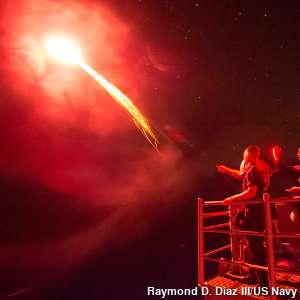


Want to compare kits while you read? You can browse the Exotic Ammo 37mm boat flares lineup any time.
Boat Flare Gun at a Glance
| What it is | A marine flare gun that sends distress flares high above your boat |
|---|---|
| Our USCG picks | The full-size Tac-79 and the compact Tac-79P pistol |
| In the box | A 37mm to 12 gauge boat flare adapter for standard marine flares |
| Marked for the water | USCG approval number 160.028/29/0, engraved on each launcher |
| Coastal rule of thumb | 16 feet and up: day and night signals. Under 16 feet: night signals after sunset |
| How many flares | If you use pyrotechnics, carry at least 3 USCG approved day and night signals |
| What it costs | $459 (Tac-79P pistol) or $564 (full-size Tac-79), adapter included, as of November 2026 |
| Flare check | Look for the expiration date, and keep flares dry and easy to reach |
| Legal check | Check your state and local rules before you buy or shoot. |
Calm seas can turn rough fast. So when you need to be seen, a boat flare launcher puts your signal high in the sky.
This guide covers the best flare gun for your boat, our USCG approved picks and the Coast Guard signal rules. It also covers marine flares, distress-signal basics and safe handling.
What Is a Boat Flare Gun?
A boat flare gun, also called a marine flare gun or boat flare launcher, is a signal launcher you keep aboard for emergencies. In other words, it fires an aerial distress flare well above the water, so other boats, aircraft and shore crews can spot you.
Many boaters know the small 12 gauge kits. Our launchers take a different route. They're 37mm launchers, approved for marine signaling, and each one includes a 12 gauge boat flare adapter. As a result, you can load the standard 12 gauge marine flares that most sporting goods stores sell.
Also, off the water, the same launcher fires 37mm rounds. For every type of flare gun, from plastic kits to metal launchers, read our flare gun guide. Or see how a flare launcher works.
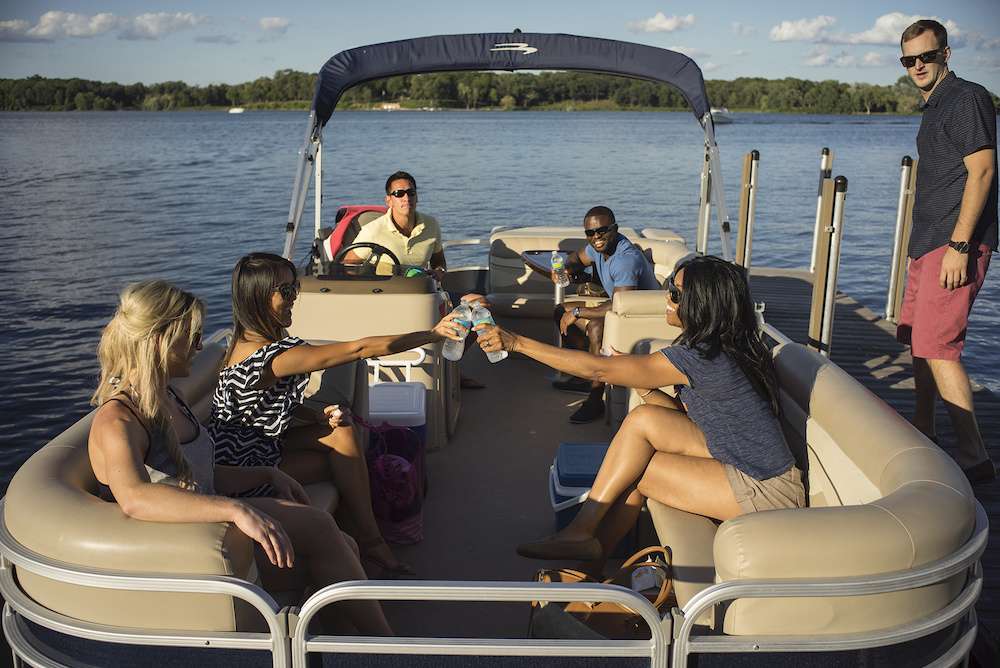
What Is the Best Flare Gun for a Boat?
For most boaters, the best flare gun is a USCG approved launcher that takes common 12 gauge marine flares. Our two USCG certified launchers share the same core features, so the main choice is size.
USCG Certified Tac-79 (Full Size)
The USCG Certified Tac-79 37mm Boat Flare Launcher is the full-size pick at $564. It has a 12-inch barrel and a six-position adjustable AR-style stock, so it feels steady on a rolling deck. Also, rails on top and bottom take a light or a grip.
USCG Certified Tac-79P (Compact Pistol)
The USCG Certified Tac-79 37mm Boat Flare Pistol Launcher is the compact pick at $459. Because of its pistol build, it stows easily in a smaller boat or a ditch bag.
What Do Both Boat Launchers Include?
- USCG approval number: we engrave 160.028/29/0 on each launcher.
- Boat flare adapter: a 37mm to 12 gauge flare adapter comes in the box, and you can add a spare.
- Metal build: 6061-T6 aluminum and 4140 steel, not plastic.
- Salt-ready hardware: stainless steel screws on the outer parts help fight corrosion.
One note: our underbarrel and M79 launchers aren't USCG approved. So keep those for fun on land. For every launcher type, see our 37mm flare launcher guide.

Marine Flare Gun Kit or 37mm Boat Flare Launcher?
Both get you seen. The difference is what happens after the first season.
A marine flare gun kit is the familiar orange box at the marina. For example, Orion's Alerter Basic 4 pairs a 12 gauge launcher with four USCG approved red aerial flares, rated at up to 500 feet and 16,000 candela. However, Orion says its launchers are built for Orion signals only.
| 12 gauge marine kit | Our USCG 37mm launcher | |
|---|---|---|
| Launcher | Plastic 12 gauge pistol | Metal Tac-79 or Tac-79P, engraved 160.028/29/0 |
| Flares | 12 gauge flares, often one brand only | Standard 12 gauge marine flares with the included adapter |
| Off the water | Emergency use only | Also fires 37mm flares, smoke and comets on land |
| Price | The budget option | $459 or $564, adapter included |
Either way, the flares are what count for the Coast Guard, and they expire. So keep at least three in date, as covered in the rules below. Want the full metal vs plastic breakdown and land prices? Then see our metal vs plastic flare gun comparison and what flare guns cost. You can also compare every model in the 37mm launchers shop.

What Do Coast Guard Rules Require on a Boat?
On coastal waters, the rule comes down to one number: 16 feet.
First, these federal signal rules apply on U.S. coastal waters and the high seas, according to 33 CFR 175.101. Then 33 CFR 175.110 sets the basic rule. Boats 16 feet or longer must carry day and night signals. Meanwhile, smaller boats need night signals between sunset and sunrise. A few boats get the lighter night-only rule too, as listed in 33 CFR 175.115. Failure to comply can lead to fines of up to $1,100 per violation.
| Who | What the rule asks for | Common ways to meet it |
|---|---|---|
| Boats under 16 feet | Night signals, between sunset and sunrise | One electric distress light, or three day-and-night red flares |
| Boats 16 feet and up | Day and night signals at all times | For example, an orange flag plus an electric light. Or three day-and-night red flares |
| Organized races, regattas and parades; manually propelled boats; small open sailboats | Night signals, between sunset and sunrise | Same night options as boats under 16 feet |
The accepted signals are listed in 33 CFR 175.130. For example, an electric distress light covers night use, while an orange flag covers day use. Also, some aerial flares must be fired from a launcher approved under 46 CFR 160.028. That's the approval series engraved on our Tac-79 launchers.
How many flares do you need? If you go the pyrotechnic route, Table 175.130 lists 3 as the number required for each flare type. So carry at least three day-and-night red flares, for example. Search and rescue experts often suggest more, and Orion's USCG FAQ recommends at least six.
Finally, signals only count if they're in good shape. Under 33 CFR 175.125, each one must be serviceable, and its marked service life can't be expired. So check the dates before every season. Our signaling devices comparison covers flares, smoke, lights and beacons in more detail.
Flare Safety on the Water
Flares only help if they work and if your crew knows how to use them. So here are the basics every boater should know.
What Are Marine Flares?
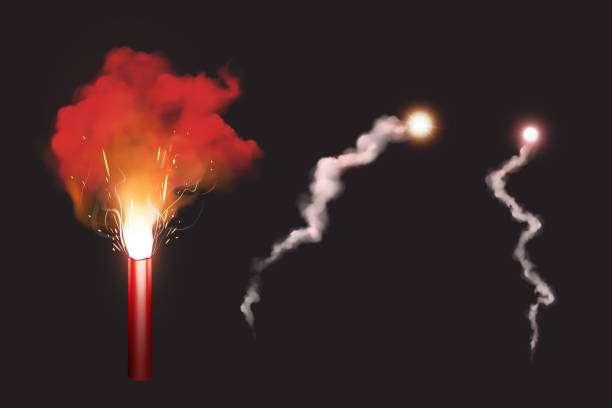
Marine flares are pyrotechnic distress signals. In other words, they burn to make bright light or thick smoke, so rescuers can find you. There are three common types:
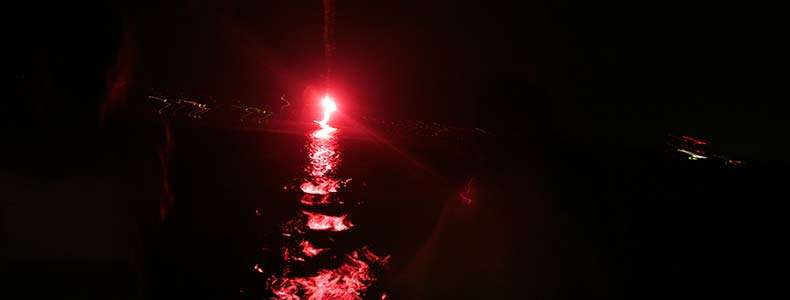
- Hand-held red flares: they burn at the surface, and they count for day and night use. Handheld flares: Bright red light, visible up to 3 nautical miles, ideal for close-range signaling.
- Aerial red flares: meteor or parachute flares climb high, so they're seen from farther away. Many of these need a launcher. Parachute (aerial) flares: High-altitude launch, visible up to 25 nautical miles, great for long-distance alerts.
- Orange smoke: hand-held or floating smoke works in daylight only. Smoke flares emit a dense, colored plume, making them particularly effective for daytime signaling. These flares burn a chemical mixture that includes potassium chlorate and lactose to create the smoke.
Also, an electric distress light can stand in for night flares. Our 37mm smoke rounds guide explains how smoke signals work.
What Are the Basics of a Distress Signal?
A distress flare means one thing: "We need help." So use one only in a real emergency. In fact, 33 CFR 175.140 limits distress signals to situations where people aboard need assistance.
- Fire when someone can see it: for example, when you spot a boat, a plane or lights on shore.
- Make it count: the Coast Guard asks witnesses about color, count and timing. So space your flares out rather than firing them all at once.
- Call too: use your VHF radio or phone, together with your flares.
- Fired one, then got help? Tell the Coast Guard by radio or phone, so they can call off the search.
Spot a flare yourself? Then the Coast Guard's "fist method" helps you report how high it rose above the horizon.

How Do You Handle Flares Safely?
Flares burn hot, so handle them with care. Also, practice the steps before you ever need them:
- Keep them handy: store flares where the crew can reach them fast, not buried under gear.
- Keep flares cool and dry, away from heat and fuel, in a clearly marked watertight container. Follow the manufacturer’s storage instructions.
- Check the dates: replace flares before their marked expiration date.
- Don’t shoot expired flares: dispose of them under your local county and state hazardous-waste rules, and confirm where they’re accepted first.
- Brief your crew: show everyone where the flares are and how the launcher loads.
- Fire up and away: point the launcher skyward and away from people, sails and the boat.
- Protect yourself: wear safety glasses, since flares are hot and bright.
After salt spray, clean the launcher the same day. Our flare launcher maintenance guide shows how. Likewise, our 37mm safety tips cover misfires and safe handling.

Can You Shoot Fun 37mm Rounds From a Boat?
Off the water, yes, and that's half the fun of a 37mm launcher. For example, the same Tac-79 fires colorful 37mm flares, comets and smoke on land.
On coastal waters, however, keep it simple. A flare in the sky can look like a call for help. In fact, 33 CFR 175.140 bars displaying a visual distress signal on these waters unless someone aboard needs help. So save fun rounds for land where they're allowed, and save distress flares for real emergencies.
On land, give every round room. Flare rounds can travel long distances and pose fire hazards. Ensure a clear area of at least 100 meters in the direction of fire, avoiding flammable materials or structures. Less-lethal rounds (like bean bags or rubber balls) have shorter ranges but can still cause injuries at close distances. Most manufacturers recommend a minimum engagement distance of 5-10 meters.
Browse all of our rounds in the 37mm ammo shop. Then see 37mm round types explained for what each one does.
Check your state and local rules before you buy or shoot.


What Goes on Your Pre-Launch Checklist?
Run through this list before you leave the dock:
- Is the boat 16 feet or longer? Then carry day and night signals.
- Heading out after sunset? Then make sure night signals are aboard.
- Do the flares carry USCG approval markings?
- Are the expiration dates still good?
- Are the flares and launcher dry and easy to reach?
- Does everyone aboard know how to use them?
This guide comes from the veteran-owned team at Exotic Ammo. So if you have a question, our FAQ and contact page are always open. New to 37mm? Then start with the 37mm overview guide, and read is 37mm legal? as well.
Boat Flare Gun FAQ
What is the best flare gun for a boat?
We recommend a USCG approved launcher that takes common 12 gauge marine flares, like our USCG Certified Tac-79 or the compact USCG Certified Tac-79 pistol. Both include a 12 gauge flare adapter.
What is a boat flare launcher?
A boat flare launcher fires distress flares high above your boat, so rescuers can see you. Our USCG certified Tac-79 launchers also take 12 gauge marine flares.
Which boat flare launcher is USCG approved?
Our USCG Certified Tac-79 37mm Boat Flare Launcher and USCG Certified Tac-79 37mm Boat Flare Pistol Launcher are USCG certified. We engrave approval number 160.028/29/0 on each one.
Can a 37mm boat flare launcher fire 12 gauge flares?
Yes. Both USCG launchers include a 37mm to 12 gauge flare adapter. However, it's for flares only, never shotgun shells.
Do I need flares on a boat under 16 feet?
On U.S. coastal waters, boats under 16 feet need night signals between sunset and sunrise. Boats 16 feet and up need day and night signals.
Do marine flares expire?
Yes. Federal rules don't count a signal whose marked service life has expired. So check the date, and replace flares before the season.
What should I do with expired flares?
Do not discharge expired flares for fun or practice. Follow your county and state hazardous-waste rules, and contact the local program to confirm where flares are accepted. Expired flares do not count toward required signals.
When should I fire a distress flare?
Fire one only in a real emergency, ideally when a boat, plane or shore crew can see it. If you fire one and then get help, tell the Coast Guard.
How many flares do I need on a boat?
On waters covered by federal visual-distress-signal rules, boats 16 feet or longer generally need both daytime and nighttime signals. Boats under 16 feet need them only when operating between sunset and sunrise. Other exemptions apply, including manually propelled boats and certain sailboats. If using pyrotechnic signals, carry at least three approved, unexpired signals for each required period. Three signals approved for both day and night can satisfy both requirements.
Is a 12 gauge marine flare gun kit enough?
It can be, as long as the flares are USCG approved, in date and there are enough of them. Our metal 37mm launchers fire those same 12 gauge flares with the included adapter, and they also work on land with 37mm rounds.
How much does a boat flare gun cost?
Our USCG certified launchers are $459 (Tac-79P pistol) and $564 (full-size Tac-79), each with a 12 gauge flare adapter, as of November 2026.
Official Sources
Each source below links to its official page, so you can check the current version. Also, tap a rule name in the article to read the exact wording right here.
- 33 CFR 175.101 (Federal (U.S. Coast Guard))
- 33 CFR 175.110 (Federal (U.S. Coast Guard))
- 33 CFR 175.115 (Federal (U.S. Coast Guard))
- 33 CFR 175.130 (Federal (U.S. Coast Guard))
- 33 CFR 175.125 (Federal (U.S. Coast Guard))
- 33 CFR 175.140 (Federal (U.S. Coast Guard))
- U.S. Coast Guard, If You See a Flare
- Orion Safety Products, USCG FAQ
- Orion Safety Products, Alerter Basic 4 product page
Continue Exploring
Thanks for reading, and fair winds out there. When you're ready, the Exotic Ammo 37mm boat flares shop and the Exotic Ammo home page are great places to start.