

ATF Form 1 for 37mm Launchers: Destructive Device Registration, Step by Step
Quick Answer
A 37mm launcher used only with flares, smoke and other signaling rounds is not a destructive device and does not need to be registered. Under ATF Ruling 95-3, owning one together with anti-personnel rounds (wood pellets, rubber pellets or balls, or bean bags) makes the combination a destructive device. To do that legally, you file ATF Form 1 (ATF Form 5320.1) to "make" a destructive device: apply on ATF eForms or by mail, pay the $200 making tax, submit fingerprints and a photo, send a copy to your chief law enforcement officer, and wait for approval before you buy any anti-personnel rounds. Then engrave the serial number and your maker's markings. State and local laws vary.
Signaling only? Skip the paperwork. Which launcher fits you?
- Rail-mounted and compact: the Tac-D 9″ underbarrel
- Full military-style underbarrel look: the m203 underbarrel
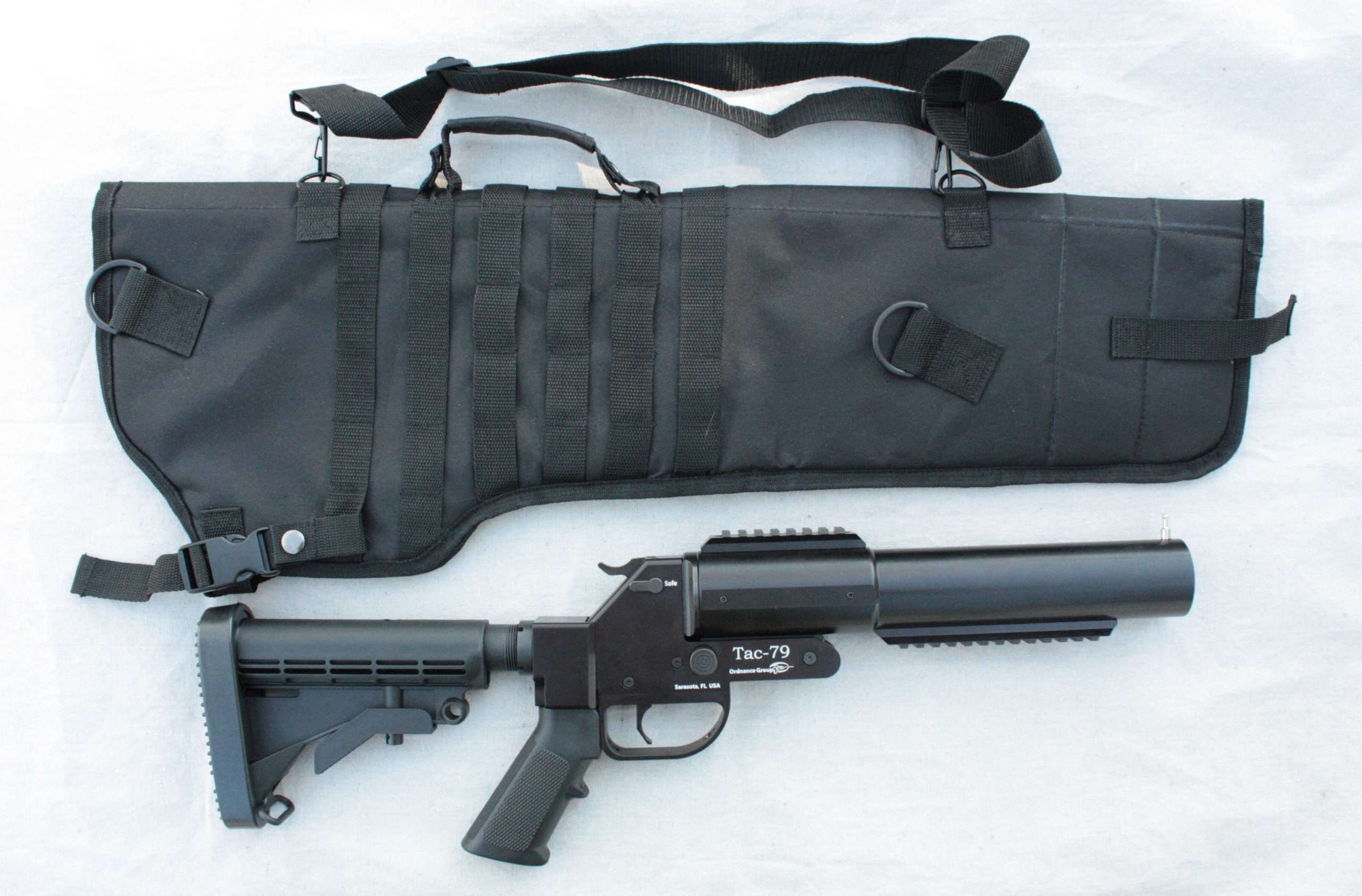
- Classic break-open simplicity: the Tac-79 top-break launcher


ATF Form 1 at a Glance
| What it is | ATF Form 5320.1 (Form 1), Application to Make and Register an NFA Firearm. Current edition: revised December 2025 |
|---|---|
| When a 37mm launcher needs it | Only if you want to own it with anti-personnel rounds (wood pellets, rubber pellets or balls, bean bags), which makes it a destructive device under ATF Ruling 95-3, or if you modify it into a weapon such as a 40mm grenade launcher |
| Making tax | $200 per destructive device. The 2026 drop to $0 covers suppressors, SBRs, SBSs and AOWs only, not destructive devices |
| How to file | Online through ATF eForms (tax paid through pay.gov) or on paper, two copies mailed to the ATF NFA Division |
| What you need | A 2 x 2 inch photo, two FD-258 fingerprint cards (or an electronic EFT file on eForms), your launcher's details, a serial number and a copy for your chief law enforcement officer (CLEO) |
| Approximate wait | ATF reports an average of about 21 days for eForm 1 and 79 days for paper Form 1 (applications finalized in August 2026). Times change and yours may differ |
| After approval | Engrave the serial number and your name, city and state (at least .003 inch deep, serial at least 1/16 inch tall) and keep your approved Form 1 |
| Federal law | 26 U.S.C. 5845(f) and 5821; 27 CFR 479.11, 479.61 to 479.63 and 479.102 |
Want to run less-lethal rounds through your 37mm launcher? Then the launcher has to be registered with the ATF as a destructive device first, and ATF Form 1 is how you do it.
Most owners never need this. A 37mm launcher used with flares, smoke and signaling rounds is a signaling device, not a firearm, and you can buy one with no special license. Registration only comes into play if you want to own the launcher with anti-personnel rounds such as rubber balls, wood pellets or bean bags.
This guide walks through destructive device registration on ATF Form 1 one step at a time: when you need it, what to gather, how to fill out each part of the form, how to pay the $200 making tax, how long approval takes and how to mark the launcher afterward. Every rule here is taken from ATF's own form instructions, rulings and regulations, linked throughout and listed at the end.
Not legal advice: this guide is general information from ExoticAmmo, not legal advice. NFA rules carry serious penalties and change over time, and state and local laws differ. Check the current ATF instructions and talk to a qualified firearms attorney about your situation before you file.


What Is ATF Form 1 (Form 5320.1)?
ATF Form 1, officially ATF Form 5320.1, Application to Make and Register an NFA Firearm, is how an individual, trust or company asks the ATF for permission to make a firearm regulated by the National Firearms Act (NFA). Federal regulations say no one may make an NFA firearm until they have filed a Form 1 and received ATF approval, and that the approval is what registers the firearm to you (27 CFR 479.62).
"Making" is broader than building from scratch. The NFA definition includes putting together or altering something so it becomes an NFA firearm (27 CFR 479.11). That is why turning a signaling launcher into a destructive device, by pairing it with anti-personnel rounds, is treated as making one. ATF Ruling 95-3 puts it directly: anyone who will use anti-personnel ammunition in a 37/38mm gas or flare launcher "must register the making of a destructive device prior to the acquisition of any anti-personnel ammunition."
When ATF approves your Form 1, it applies the tax stamp to the application and returns the approved copy to you. That approved form is your proof of registration.
In short: Form 1 is the application to make and register an NFA firearm. For a 37mm launcher it is how you legally convert a signaling device into a registered destructive device, and it must be approved before you get any anti-personnel rounds.


Does a 37mm Launcher Need Destructive Device Registration?
It depends on what you own it with. Here is how federal law treats each case.
When a 37mm launcher is not an NFA item
Under the NFA, any weapon with a bore over one-half inch that fires a projectile with an explosive or other propellant is a destructive device. The same definition excludes any device that is not designed or redesigned for use as a weapon, or that is redesigned for use as a signaling, pyrotechnic, line-throwing, safety or similar device (27 CFR 479.11, 26 U.S.C. 5845(f)). ATF Ruling 95-3 confirms that ATF has held that devices designed to expel tear gas or pyrotechnic signals are not weapons and are exempt from the definition. A 37mm launcher used with flares, smoke and other signaling rounds needs no Form 1, no tax stamp and no registration under federal law. Our 37mm legal guide covers this in more detail.
When it becomes a destructive device
ATF Ruling 95-3 holds that a 37/38mm gas or flare launcher possessed with "anti-personnel" ammunition, meaning cartridges containing wood pellets, rubber pellets or balls, or bean bags, is a destructive device under both the NFA and the Gun Control Act. Once it is paired with those rounds, the launcher must be registered and serialized, and it is treated as a firearm under federal law. The ruling also says registration must come before you acquire any anti-personnel ammunition.
What about 40mm?
Military 40mm grenade launchers, like the original M79 and M203, are weapons with a bore well over one-half inch, so they fall under the destructive device definition. Live high-explosive grenades are destructive devices on their own (ATF NFA Handbook, chapter 2). Altering a 37mm launcher into a 40mm grenade launcher is "making" a destructive device, so it also needs an approved Form 1 before any work starts. See 37mm vs 40mm and our grenade launcher guide for how the two calibers differ.
Bottom line: signaling rounds only means no registration. Anti-personnel rounds, or turning the launcher into a weapon, means destructive device registration on an approved ATF Form 1 first.
The 109-grain (¼ ounce) limit. Under federal law, 26 U.S.C. 5845(f), a "destructive device" includes a "missile having an explosive or incendiary charge of more than one-quarter ounce." A quarter ounce is about 109 grains, or roughly 7.06 grams. The law applies that limit to the explosive or incendiary charge in the projectile itself. To stay safely under it, ExoticAmmo takes the more conservative approach: we keep the lift charge and the payload together at no more than 109 grains in every 37mm round. A round over that limit may be classified as a destructive device and fall under NFA rules. This is general information, not legal advice. Check your state and local laws too.
2026 note: you may have read that the NFA tax dropped to $0 in 2026 and that ATF stopped requiring approval for some NFA items. That change covers suppressors, short-barreled rifles, short-barreled shotguns and "any other weapons" only. ATF says the $200 tax stays in place for machine guns and destructive devices and that "the NFA requirements apply in full" to them (ATF, Update to NFA Transfer Guidance). A 37mm destructive device still needs an approved Form 1.

Form 1 vs Form 4: Making vs Buying
Both forms put an NFA firearm on the registry in your name, but they cover different situations.
| Form 1 (ATF Form 5320.1) | Form 4 (ATF Form 5320.4) | |
|---|---|---|
| Use it when | You make an NFA firearm yourself, including turning your own 37mm launcher into a destructive device | You buy or receive an NFA firearm that is already registered to someone else |
| Who files | You (the maker), as an individual, trust or entity | The current registered owner, usually through a dealer, with you as the transferee |
| Tax for a destructive device | $200 making tax | $200 transfer tax |
| When you can take possession | Only make the destructive device after approval | Only take possession after approval |
If you are converting a launcher you already own, Form 1 is the right form. Form 4 is for buying a destructive device that someone else already registered.
What You Need Before You Start
Gather these before you open the form. Most delays come from missing or unreadable items.
- Your launcher's details: manufacturer and address, model as marked, caliber (37mm), barrel length and overall length.
- A serial number: the launcher's existing serial number, or a unique one you create (see engraving requirements).
- Your maker's markings: your name, city and state, exactly as they will be engraved on the launcher.
- A 2 x 2 inch photo: front view, head bare. The current form instructions say it must be taken within six months before you apply.
- Fingerprints: two FBI FD-258 fingerprint cards taken by someone properly equipped to take them, or an electronic EFT fingerprint file if you file on eForms.
- Your CLEO's details: the agency, official's name and title, and address of your chief law enforcement officer (local police chief, county sheriff, head of the state police, or a state or local district attorney or prosecutor).
- $200 for the making tax: paid through pay.gov on eForms, or by credit or debit card on a paper form (do not send cash).
- A state or local permit, if your state requires one: a copy must go in with the application.
- For a trust or company: the full trust or entity documents and an ATF Form 5320.23 for each responsible person.
Individual vs Trust or Other Entity
You can register the destructive device to yourself or to a trust, corporation, LLC or other legal entity. The paperwork is different for each.
| Individual | Trust, corporation or other entity | |
|---|---|---|
| Name on the form | Your full legal name, including middle name | Only the full name of the trust or entity, with no individual names |
| Address | Your physical address (no P.O. boxes) | For a trust, where the firearm will be kept; for a company, its principal place of business in that state |
| Photos and fingerprints | Your 2 x 2 photo and two FD-258 cards | A Form 5320.23 with a photo and two FD-258 cards for every responsible person |
| Extra documents | None | Complete, unredacted trust or entity documents, including schedules and attachments |
| CLEO copy | A copy of your Form 1 to your CLEO | A copy of each responsible person's Form 5320.23 to that person's CLEO |
A responsible person is anyone who has the power, directly or indirectly, to direct how the trust or entity receives, possesses, transports or disposes of its firearms, such as a trustee with that authority. Sources: 27 CFR 479.63 and the Form 1 instructions. If the entity had a Form 1 or Form 4 approved in the last 24 months and its documents have not changed, it can certify that instead of resending them.
How to Register a 37mm Launcher on ATF Form 1, Step by Step
Here is the full destructive device registration process from start to finish. Item numbers refer to the current Form 5320.1 (revised December 2025).
- Confirm it is legal where you live. When you sign Form 1, you declare under penalty of perjury that making and owning the destructive device would not break federal, state or local law. Check your state and local rules first, and get any permit your state requires.
- Decide who will own it. Choose whether to apply as an individual or through a trust or entity (see the table above), since that changes which documents, photos and fingerprints you need.
- Plan your serial number and markings. Use the launcher's existing serial number if it has one, or create a unique serial number. Write down your maker's markings (your name, city and state as registered) exactly as they will be engraved.
- Create your ATF eForms account or get the paper form. Register at eforms.atf.gov, or download the current Form 5320.1 PDF. ATF marks earlier editions obsolete, so use the current one.
- Choose the application type. In item 1, mark "Tax-paid," the $200 option for a machine gun or destructive device, and choose your applicant type in item 2.
- Describe the launcher (item 4).
- 4a: the original manufacturer's name and address.
- 4b: type of firearm, destructive device.
- 4c: caliber, 37mm (list only one).
- 4d: the model, as marked on the launcher.
- 4e and 4f: barrel length and overall length.
- 4g: the serial number.
- 4h: your maker's markings (name, city and state).
- 4i: why you intend to make the firearm.
- 4j: type of destructive device, "Firearm." The "Explosives" box is for explosive-type devices, which need a federal explosives license or permit.
- Add your photo and fingerprints. On paper, attach the photo and two FD-258 cards. On eForms, upload your photo. After you submit, ATF emails a cover letter, and within 10 days you either upload an EFT fingerprint file or mail two FD-258 cards with that cover letter.
- Send the CLEO copy. Before you submit, send a completed copy of your Form 1 to your chief law enforcement officer (each responsible person sends their Form 5320.23 to their own CLEO). The CLEO does not have to sign or approve anything. It is a notification only.
- Pay the $200 and submit. On eForms the tax is paid through pay.gov. On paper, complete the payment section and mail two copies to the NFA Division at the address on the form.
- Wait for approval, then make it official. Do not buy any anti-personnel rounds or alter the launcher until you have the approved Form 1 with its tax stamp. Once approved, engrave the required markings and keep the approved form with your records.
Watch out: ATF must deny an application if making or owning the firearm would put you in violation of the law, and anyone barred from owning firearms will be denied. Penalties for NFA violations include fines of up to $10,000 and up to 10 years in prison (Form 5320.1 instructions).


Serial Number and Engraving Requirements
As the maker of a destructive device, you have to mark the launcher yourself. Federal regulations (27 CFR 479.102) and the Form 1 instructions require:
- A serial number on the frame or receiver that you have not used on any other firearm. Do not alter an existing serial number. If the launcher has one, list it in item 4g; if not, create your own. ATF does not assign one.
- Your name, city and state where you made the firearm, matching item 3 of your Form 1.
- The model (if one has been designated) and the caliber, 37mm.
- Depth and size: engraved, cast or stamped at least .003 inch deep, with the serial number at least 1/16 inch tall.
- Legible and permanent: Roman letters and Arabic numerals only (a hyphen is allowed), easy to see with the naked eye, and hard to obliterate, alter or remove.
A professional engraver or laser-marking shop that already does NFA work can do this for you. Take your approved Form 1 so the markings match it exactly.

How Long Does ATF Form 1 Approval Take?
ATF posts average processing times every month. These were the latest figures when this guide was updated:
| Form | eForms | Paper |
|---|---|---|
| Form 1 (make and register) | About 21 days | About 79 days |
| Form 4, individual (buy a registered item) | About 6 days | About 28 days |
| Form 4, trust | About 20 days | About 37 days |
These are ATF's averages for applications finalized in August 2026 (ATF Current Processing Times). They cover all NFA item types, not just destructive devices, and ATF notes that some applications take longer. Treat them as approximate, and check ATF's page for the latest numbers before you file.
eForms vs Paper Form 1
| eForms | Paper | |
|---|---|---|
| How you submit | Online at eforms.atf.gov | Two copies mailed to the NFA Division at the address on the form |
| Paying the $200 tax | Through pay.gov during submission | Credit or debit card in the payment section (no cash) |
| Fingerprints | Upload an EFT file, or mail two FD-258 cards with ATF's cover letter, within 10 days | Two FD-258 cards attached to the application |
| Average wait (Aug 2026) | About 21 days | About 79 days |
| CLEO copy | Send a completed copy to your CLEO. ATF also emails you a CLEO copy of the submitted eForm | Send a completed copy to your CLEO before you mail the application |
For most people eForms is faster and simpler. Paper is still accepted if you prefer it.
After Approval: Owning a Registered Destructive Device
A registered 37mm destructive device comes with ongoing responsibilities. The approved Form 1 lists them:
- Keep proof of registration. Keep your approved Form 1 and show it to any ATF officer who asks.
- Get approval before crossing state lines. Federal law (18 U.S.C. 922(a)(4)) may require you to notify ATF before you take a destructive device to another state. ATF Form 5320.20 is used for this.
- Report changes. Tell the NFA Division in writing if you move, unless you are licensed under the Gun Control Act, or if you change the launcher's description.
- Remember it is now a firearm. Under ATF Ruling 95-3, the launcher is treated as a firearm under the Gun Control Act when possessed with anti-personnel ammunition, so federal firearm rules, including the bans on prohibited persons, apply. If you become prohibited, contact the NFA Division about how to dispose of it.
- Selling it later. A registered destructive device can only change hands through an approved ATF transfer application, such as a Form 4, with the $200 transfer tax.
Always follow 37mm launcher safety rules, especially with less-lethal rounds.


State and Local Law Caveats
An approved federal Form 1 does not override state or local law. Some states and cities ban or restrict destructive devices, require their own permits, or regulate less-lethal launchers and ammunition on their own terms. ATF's guidance says plainly that its NFA policies do not replace state and local laws, and the Form 1 itself asks you to swear that making the firearm would not break any state or local law.
Before you file, check your state's current statutes and talk to local law enforcement or a firearms attorney in your state. If your state requires a permit to make the firearm, include a copy with your application.
Bottom line: federal approval is only one part. Your state and local rules have to allow it too.
ExoticAmmo 37mm Launchers
Every ExoticAmmo 37mm launcher is made in the USA and ships as a signaling device that needs no license to buy. If you later choose to register one as a destructive device, the steps above apply to any of these models.
Tac-m79 37mm Top Break Launcher GI Fiberglass (12″ or 14″)
View launcher
Tac-79 37mm Top Break Launcher
View launcher
m203 37mm Launcher (Underbarrel)
View launcher


ATF Form 1 FAQ
What is ATF Form 1?
ATF Form 1 (ATF Form 5320.1) is the Application to Make and Register an NFA Firearm. You file it, and get it approved, before you make an NFA firearm, including turning a 37mm launcher into a destructive device. Approval registers the firearm to you.
Do I need to register my 37mm launcher with the ATF?
Not if you only use it with flares, smoke and other signaling rounds. Under federal law a 37mm signaling launcher is not a destructive device. Registration on ATF Form 1 is required only if you want to own it with anti-personnel rounds, or if you modify it into a weapon. State and local laws vary.
What makes a 37mm launcher a destructive device?
ATF Ruling 95-3 holds that a 37/38mm gas or flare launcher possessed with anti-personnel ammunition, meaning cartridges containing wood pellets, rubber pellets or balls, or bean bags, is a destructive device under the NFA and the Gun Control Act. It must be registered before you acquire any anti-personnel ammunition.
How much does destructive device registration cost?
The federal making tax is $200 per destructive device. The 2026 change that cut the NFA tax to $0 applies only to suppressors, short-barreled rifles, short-barreled shotguns and any other weapons. Machine guns and destructive devices are still $200.
How long does ATF Form 1 approval take?
ATF reported average processing times of about 21 days for eForm 1 and about 79 days for paper Form 1 applications finalized in August 2026. These are averages across all NFA item types, so your wait may be longer or shorter. Check ATF's Current Processing Times page for the latest figures.
Can I file ATF Form 1 online?
Yes. You can file Form 1 through ATF eForms at eforms.atf.gov and pay the $200 tax through pay.gov. After you submit, you have 10 days to upload an electronic fingerprint file or mail two FD-258 fingerprint cards with ATF's cover letter. Paper filing by mail is still accepted.
Do I have to notify my local sheriff or police chief?
Yes. You must send a completed copy of your Form 1 to your chief law enforcement officer, such as your local police chief or county sheriff. It is only a notification. The CLEO does not need to sign or approve it.
Does the ATF give me a serial number?
No. If your launcher already has a serial number, list it and do not alter it. Otherwise you create a unique serial number. After approval you engrave it with your name, city and state, at least .003 inch deep, with the serial number at least 1/16 inch tall.
Should I register as an individual or through a trust?
Either works. An individual applies in their own name with their own photo and fingerprints. A trust or other entity must include its full documents plus an ATF Form 5320.23, a photo and two fingerprint cards for every responsible person, and each responsible person notifies their own CLEO.
Is a 40mm grenade launcher a destructive device?
Yes. A 40mm grenade launcher is a weapon with a bore over one-half inch, so it is a destructive device under the NFA, and live high-explosive grenades are destructive devices too. Altering a 37mm launcher into a 40mm grenade launcher is making a destructive device and needs an approved Form 1 first.
What is the 109 grain limit for 37mm rounds?
109 grains is ExoticAmmo's conservative limit: we keep the lift charge and the payload together at no more than 109 grains (about 7.06 grams, or a quarter ounce) in every 37mm round. The federal quarter-ounce limit in 26 U.S.C. 5845(f) applies to the explosive or incendiary charge in the projectile itself. A round over that limit may be classified as a destructive device.
Can I buy anti-personnel rounds while my Form 1 is pending?
No. ATF Ruling 95-3 says you must register the making of the destructive device before you acquire any anti-personnel ammunition. Wait until you have your approved Form 1 with the tax stamp.
Official Sources
- ATF Form 5320.1 (Form 1) and instructions, revised December 2025
- ATF Ruling 95-3: 37/38mm gas/flare guns with anti-personnel ammunition
- 27 CFR Part 479 (sections 479.11, 479.61, 479.62, 479.63 and 479.102)
- 26 U.S.C. 5845: definitions, including "destructive device" in 5845(f)
- ATF: Update to NFA Transfer Guidance (October 2026)
- ATF: Current Processing Times
- ATF eForms
- ATF National Firearms Act Handbook
Disclaimer: this article is for general information only and is not legal advice. ExoticAmmo is not a law firm. Laws, ATF forms and processing times change, and you are responsible for following federal, state and local law. Check with ATF and a qualified attorney before you make or register a destructive device.
Continue Exploring
- 37mm legalities: legal ownership of 37mm launchers
- Grenade launchers: history, types, legal rules and the 37mm you can own
- 37mm vs 40mm: what is the difference?
- 37mm less-lethal launchers and rounds
- 37mm launchers: types, uses and buying guide
- 37mm rounds
- M203 grenade launcher: history, specs and the 37mm you can own
- M79 grenade launcher: the Thumper and its 37mm replica